


I spent twenty years in a reference library, and if there is one thing I learned, it is that people will pay a premium for a beautiful lie. You’ve likely seen the glossy magazine spreads promising that Jupiter’s transit will magically deposit a windfall into your bank account by Tuesday. It’s nonsense. Astrology isn’t a lottery ticket, and I’m tired of seeing people treat the year chart and money decisions as if they are reading a weather report for a guaranteed sunny day. The planets don’t have hands in your pockets; they simply mark the mathematical cycles of energy and tension that exist in your life.
I’m not here to tell you when you’ll strike it rich or which stocks to buy. Instead, I want to show you how to look at the solar return and the transits to see where your focus is likely to shift. We will look at the mechanics of the houses and the planetary aspects to understand where your resources might feel constrained or where they might expand. My goal is to give you a clearer map of your own internal landscape, so you can make your financial choices with your eyes wide open.
Mapping the Solar Return Chart Financial Outlook With Precision
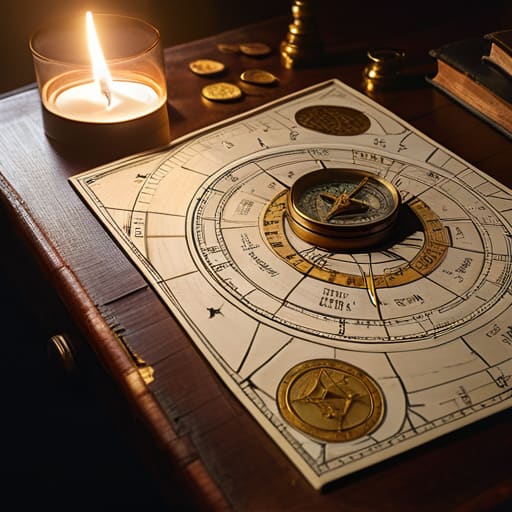
To understand how a year might play out, we first have to look at the mechanics of the Solar Return. This isn’t a mystical prophecy; it is simply a snapshot of the sky at the exact moment the sun returns to the same degree it occupied when you were born. When I sit down with a client, I start by looking at where the houses of the return chart fall in relation to their natal chart. Specifically, I look for any planetary aspects to money houses, such as the second or eighth, because that tells us which area of your life is being “activated” by the solar cycle.
If you see a heavy concentration of planets in the second house of the return chart, it doesn’t mean you’ll suddenly strike gold. It just means the energetic focus of your year is likely to be on resource management. I often find that people mistake a busy second house for a guarantee of wealth, but it can just as easily indicate a year of intense lessons regarding second house astrology money—learning how to budget, how to value your labor, or how to stop the leaks in your checking account. I’m interested in the data the chart provides, not the fairy tale.
The Year Chart and Money Decisions Analyzing the Raw Data

When I sit down with a solar return, I don’t look for a “get rich quick” signal. Instead, I look at the architecture of the year. I start by locating the descendant or the house cusps in the new chart to see where the energy is being directed. If the ruler of your natal second house is making a tense aspect to a planet in your solar return’s eighth house, I’m not going to tell you that you’ll lose your house; I’ll simply note that the mechanics of your resources are under significant pressure. It is a matter of looking at where the mathematical tension lies between your permanent character and this year’s temporary weather.
I also pay close attention to second house astrology money indicators within the return. If a heavy-hitting planet like Saturn is sitting right on that cusp, the data suggests a period of restriction or a need for strict budgeting, not a sudden windfall. I’ve spent too many years cross-referencing the ephemeris to believe in magic, but I do believe in patterns. By examining how these planetary aspects interact with your money houses, we can see where the year asks you to be a steward and where it might invite a bit of volatility.
Tracing Jupiter Transits and Wealth Without the Mystical Fluff
Now, we need to talk about Jupiter. In most popular astrology books, Jupiter is treated like a magic wand—a cosmic “yes” that guarantees a windfall if you just believe hard enough. That isn’t how the math works. When I look at jupiter transits and wealth, I’m not looking for a lottery win; I’m looking for where the expansion is actually occurring. Jupiter moves slowly, taking about a year to cross a single sign, which means its influence is a long, steady swell rather than a sudden lightning strike.
I start by checking where Jupiter is hitting your houses, specifically looking for planetary aspects to money houses like the second or eighth. If Jupiter is transiting your second house, it doesn’t mean money will fall from the sky; it means your capacity to earn or your sense of value is expanding. It might even mean your expenses grow right alongside your income. I track these movements against your natal chart to see if the transit is actually hitting a sensitive point or if it’s just passing through empty space. It’s about identifying the increased appetite for risk, not a guarantee of profit.
Second House Astrology Money Calculating Your Personal Resource Baseline
While the solar return chart gives us the “weather” for the year, the Second House is where we look at the actual soil. In my years of cross-referencing charts, I’ve found that people often confuse the two. The solar return might show a sudden opportunity, but your natal Second House tells you how you actually handle what lands in your hands. This house governs your personal resource baseline—not just the balance in your checking account, but your innate relationship with tangible value. When I sit down with a new chart, I look first at the sign on this cusp and which planets are currently making planetary aspects to money houses to see if your capacity to hold onto wealth is expanding or tightening.
It isn’t about luck; it’s about your psychological architecture. If you have Saturn sitting in your Second House, you might find yourself being naturally more conservative or cautious with every paycheck, regardless of what the yearly forecast says. I use this data to distinguish between a temporary windfall and a fundamental shift in your capacity to earn. By understanding this baseline, you can better judge whether a sudden impulse is a genuine opportunity or just a temporary fluctuation in your lunar cycles and spending habits.
Astrological Timing for Investments Identifying Mathematical Windows of Opp
When I look at a client’s chart, I don’t look for “lucky days”; I look for the geometry of the transit. To understand astrological timing for investments, you have to move away from the idea of destiny and toward the idea of momentum. We are looking for when a moving planet forms a mathematical relationship—an aspect—to the fixed points in your birth chart or your solar return. For instance, when a slow-moving planet like Saturn makes a precise angle to your natal Midheaven, it isn’t “making” you invest; it is simply creating a period of structural tension or consolidation that often coincides with professional shifts.
I find that people get most tripped up by the difference between a transit and a cycle. While jupiter transits and wealth are often cited as the gold standard for expansion, they are only useful if you understand the math behind the expansion. A Jupiter transit provides the energetic “green light,” but if that transit is squaring your natal Moon, you might find yourself investing based on an emotional impulse rather than a calculated strategy. I always tell my readers: the chart shows the window of opportunity, but you are the one who has to decide if you’re actually prepared to step through it.
Planetary Aspects to Money Houses Where the Geometry Meets Reality
When we talk about planetary aspects to money houses, we are moving away from looking at single planets in isolation and instead looking at the geometric tension between them. If you have a transit squaring your natal Venus or Jupiter, it isn’t a cosmic decree that you will go bankrupt; rather, it is a mathematical indicator of friction. In my experience, these aspects often manifest as a sudden, irrational urge to spend or a period where your usual resource management feels particularly heavy. I tend to look for these angles to see where the internal pressure is building, because that is usually when a person is most prone to making a hasty financial choice.
I also pay close attention to how these aspects interact with your lunar cycles and spending habits. Because the Moon moves so quickly, its aspects to your money houses can create short-lived, emotional waves of impulse. If a Moon aspect hits your second house, you might feel an intense, fleeting need to “buy your way” into a better mood. By recognizing these patterns as mere mathematical intersections rather than destiny, you can observe the urge to spend without feeling obligated to act on it.
Lunar Cycles and Spending Habits Observing the Observed Patterns
I’ve always found that while people obsess over the heavy hitters like Jupiter transits and wealth, they often overlook the much more rhythmic, almost biological influence of the moon. When I look at a client’s data, I’m not looking for a “prophecy” of a windfall; I’m looking at the ebb and flow of their impulse control. The moon moves quickly, cycling through the signs every two and a half days, and it tends to act as a magnifying glass for our emotional states. If you are tracking your lunar cycles and spending habits, you’ll likely notice that your desire to “treat yourself” or seek comfort through acquisition peaks during certain phases.
It isn’t magic; it’s a matter of internal tempo. During a New Moon, there is often a subconscious urge to plant seeds—perhaps a new budget or a small, controlled purchase. By the Full Moon, that tension often breaks, leading to more erratic, emotional expenditures. I suggest keeping a simple log alongside your bank statements. If you can map your emotional highs to the lunar phases, you might find that your “financial emergencies” are actually just cyclical emotional releases that have nothing to do with the actual math of your bank account.
The Limits of the Forecast
I’ve spent too many years looking at ephemerides to suggest that a Jupiter transit is a winning lottery ticket; rather, think of the solar return chart as a weather report for your resources—it won’t make the rain stop, but it might tell you whether you’re currently equipped to handle the storm or if it’s a better time to stay indoors and save what you have.
Rosalind Teague
The Limits of the Map
We have spent a considerable amount of time looking at the mechanics—from the placement of Jupiter to the specific geometry of your Solar Return houses. I’ve tried to show you that these aren’t mystical decrees, but rather a mathematical snapshot of where certain energies are concentrated during your personal new year. We looked at how your second house sets a baseline for resources and how lunar cycles might nudge your impulse control. Ultimately, the data provides a framework of probabilities, not a set of instructions. You now have the tools to see where the transit data suggests a window of opportunity and where it suggests a period of necessary caution.
I often tell my clients that a chart is much like a weather vane; it can tell you which way the wind is blowing, but it cannot make you decide whether to stay home or set sail. Use this information to sharpen your own intuition rather than replacing it. The goal isn’t to let the planets manage your bank account, but to use these patterns to understand your own tendencies more clearly. Once you see the geometry behind the timing, the choice of how to act remains, as it always has, entirely yours.
