


I remember sitting at my mother’s heavy oak desk in 1984, surrounded by the scent of old paper and ink, staring at a chart that looked more like a chaotic spiderweb than a map of a human life. Most people will tell you that finding your “Big Three” or hunting for a specific planet is the first thing to look at in a new chart, but they’re usually just chasing patterns that feel good rather than patterns that are accurate. They treat the chart like a fortune cookie, hoping for a lucky sign, when they should be treating it like a complex piece of machinery that requires a proper manual.
I’m not here to give you a list of personality traits to collect like trading cards. Instead, I want to show you how to find the structural foundation—the actual mathematical scaffolding—that holds the rest of the symbols up. I will explain how to identify the primary tension points that dictate the chart’s shape, and I will be very clear about where the data ends and where your own interpretation begins. My goal is to help you see the mechanics, so you can make your own sense of what you’re looking at.
Understanding the First Thing to Look at in a New Chart
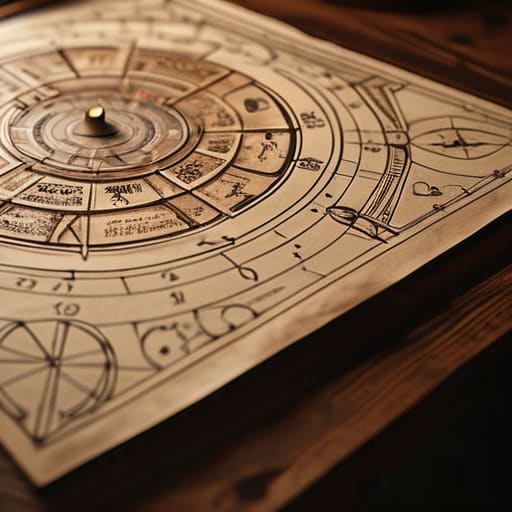
When I sit down with a fresh printout, my eyes don’t go straight to the complex web of aspects or the intricate lines connecting the planets. That’s where most people get lost. Instead, I start with the skeleton. Before I even think about interpreting natal chart elements in a deep, psychological sense, I look for the primary anchors. I need to see where the Sun, the Moon, and the Ascendant sit in relation to one another. This isn’t about destiny; it’s about establishing the mathematical baseline of the individual.
I find that most beginners rush toward the “meaning” of a planet without first acknowledging the geometry of the wheel itself. You have to understand the framework before you can read the contents. I always begin by locating the Sun, the Moon, and the Rising sign—what many call the “Big Three”—because they provide the most stable data points for the chart’s structure. If you don’t understand how these three pillars interact, you’re essentially trying to read a map without knowing which way is North. Establishing this orientation is the only way to ensure the rest of the reading remains grounded in the actual data.
Key Things to Know

Before we dive into the math, you need to understand that a chart is a snapshot, not a script. When I’m sitting at my desk with a fresh printout, I start by checking the math of the astrological house system basics. If the house cusps aren’t calculated correctly based on the specific birth time, everything that follows—every planet’s “neighborhood”—is essentially a guess. I always write the birth time down twice on my index cards just to be certain; if that time is off by even ten minutes, the entire architecture of the wheel shifts.
Once the geometry is verified, I move toward understanding the big three astrology components. This isn’t about finding a “personality type” to fit into a box; it is about locating the primary tension points between the Sun, the Moon, and the Ascendant. I look at the Sun for the core identity, the Moon for the internal emotional landscape, and the Rising sign to see how that identity meets the world. I don’t view these as fixed destinies, but rather as the fundamental coordinates that provide the framework for everything else we might interpret later.
Practical Tips and Steps

When I sit down at my desk with a fresh printout, I don’t start by hunting for “destiny.” Instead, I start with the math. My first practical step is to verify the coordinates and the time. If the time is even five minutes off, the entire mathematical architecture shifts. I always write the birth time down twice—once on my notepad and once on the margin of the chart itself—just to ensure I’m not building a house on a shaky foundation. Once the data is verified, I focus on understanding the big three astrology components: the Sun, Moon, and Ascendant. I look at how they interact before I even glance at the more complex aspects.
From there, I recommend a slow, methodical scan. Don’t try to interpret every single degree at once; you’ll end up with a headache and a lot of guesswork. Instead, focus on the planetary placements meaning in relation to the houses. If you are learning how to read an astrology wheel, try to identify where the heaviest clusters of planets are sitting. Are they all bunched up in one area, or spread out? Identifying these patterns tells you more about the chart’s internal tension than any single “lucky” placement ever could.
Common Mistakes to Avoid
The most frequent error I see—and I’ve seen it in my own notes from years ago—is the rush to jump straight into the heavy lifting without checking the foundation. People often dive into complex planetary placements meaning before they’ve even verified if the birth time is accurate. If that time is off by even twenty minutes, the entire mathematical structure of the chart shifts. I always tell my students: don’t start building a house on a swamp. If you haven’t confirmed the Ascendant, you are essentially guessing at the entire framework.
Another pitfall is the tendency to treat every single aspect like a life sentence. There is a certain anxiety that creeps in when beginners start interpreting natal chart elements in isolation, treating a single square or opposition as a fatal flaw. Astrology isn’t a collection of disconnected warnings; it is a system of geometry. If you focus solely on the “difficult” aspects and ignore how the rest of the wheel balances them out, you aren’t reading a chart—you’re just collecting bad news. Keep your eyes on the whole picture, not just the friction points.
Final Thoughts
I’ll leave you with this: don’t let the sheer volume of symbols overwhelm you. When I first started pulling data from the ephemeris, I used to think a chart was a map of destiny. It isn’t. It’s more like a weather report for a specific moment in time. You can see where the pressure systems are, but you still have to decide whether or not to carry an umbrella. Whether you are focusing on understanding the big three astrology or trying to untangle complex aspects, remember that the math is stable even when the interpretation feels shaky.
As you move forward, keep your eyes on the mechanics. If a reading feels too “perfectly tailored” to your life, it’s likely because the reader is leaning on jargon rather than the actual planetary placements meaning. I prefer to keep my card index organized by the hard data—the degrees, the houses, and the coordinates. If you stay grounded in the geometry of the wheel, you won’t get lost in the mysticism. Trust the math, but trust your own judgment more.
The Anchor of the Chart
Before you start chasing the drama of a Mars aspect or the complexity of a Saturn return, you have to find the center of gravity. I always look for the Sun and the Ascendant first; they aren’t destiny, they are simply the coordinates that tell you where the light is hitting the map. If you don’t know where the sun is standing, you’re just squinting at a pile of symbols.
Rosalind Teague
A Final Look at the Ledger
We have covered a lot of ground, moving from the raw mechanics of the ephemeris to the specific way the planets sit within the houses. If you take nothing else away from this, remember that a chart is not a roadmap of destiny, but a snapshot of a specific moment in time. We looked at how to verify the birth time—because without that precision, the whole house system collapses—and we discussed why you must always look at the planetary dignity before you start assigning personality traits. By focusing on the mathematical reality of the placements rather than the sweeping generalizations found in most paperbacks, you are building a foundation that is actually sturdy enough to lean on.
I often think back to my years in the library, where every book was a closed system of information waiting to be cataloged. A birth chart is much the same; it is a collection of data points, not a set of instructions. My hope is that you approach your next reading with a bit of that same librarian’s skepticism and a healthy dose of curiosity. Don’t let the jargon intimidate you, and more importantly, don’t let the symbols dictate your worth. Use the chart as a mirror to see what is already there, but remember that you are the one holding the light.