


I remember sitting at my mother’s heavy oak desk in the late seventies, surrounded by the scent of old paper and ink, staring at two different synastry charts that seemed to tell entirely different stories. One suggested a lifetime of harmony, while the other whispered of inevitable friction, and I realized then that most people treat a static comparison like a photograph when it is actually more like a moving film. People get caught up in the “snapshot” fallacy, assuming that if two people align today, they are locked into that pattern forever. They fail to account for what changes in a comparison over time as the planets move through their cycles and the individuals themselves evolve.
I am not here to tell you that the stars have a fixed script for your relationships, nor will I use sweeping, mystical jargon to mask a lack of data. Instead, I want to show you the actual mechanics of how these planetary aspects shift and drift as the years pass. I will explain how the math of the ephemeris works and where the predictive certainty begins to blur, giving you the tools to look at your own connections with a clear, unsentimental eye.
Understanding What Changes in a Comparison Over Time
When we look at a synastry chart—the overlay of two people’s planetary positions—we aren’t looking at a static photograph. We are looking at a map of two moving bodies. Most people make the mistake of treating a comparison as a fixed verdict: “We have Mars conjunct Venus, so we are soulmates.” But the planets are never standing still. As the months and years pass, the planets move through different houses and form new angles with the natal charts of both individuals. This creates what I call the evolution of romantic compatibility; the tension that felt electric in your first year might become a dull ache in your fifth, simply because the planetary geometry has shifted its focus.
This movement is why we must study astrological relationship cycles rather than just a single snapshot. A transit might trigger a sensitive point in your chart that wasn’t active when you first met, leading to sudden, seemingly inexplicable shifts in how you perceive one another. It isn’t that the people have changed—though they certainly have—but rather that the mathematical friction between your two charts is constantly being recalculated by the clock. I don’t claim these shifts are predestined, but understanding the cycle helps you see the pattern behind the feeling.
Key Things to Know

When I look at a synastry chart—that is, a comparison of two people’s birth data—I am not looking at a static snapshot. It is more like looking at a photograph of a moving river. One thing you must understand is that the planets are never still. Even if your natal placements feel like fixed personality traits, the way those planets interact with a partner’s moving transit points creates a constant evolution of romantic compatibility. You aren’t just comparing two sets of coordinates; you are comparing two moving targets.
I find that most people get tripped up when they expect a relationship to feel the same way in year ten as it did in month two. This is rarely the case because of astrological relationship cycles. As the slower-moving outer planets move through different houses in a partner’s chart, the very “flavor” of your connection shifts. It isn’t that the people have changed fundamentally, but rather that the mechanics of the interaction have moved into a new phase. I always tell my clients to watch for these shifts in the math, rather than assuming the initial spark has simply died.
Practical Tips and Steps
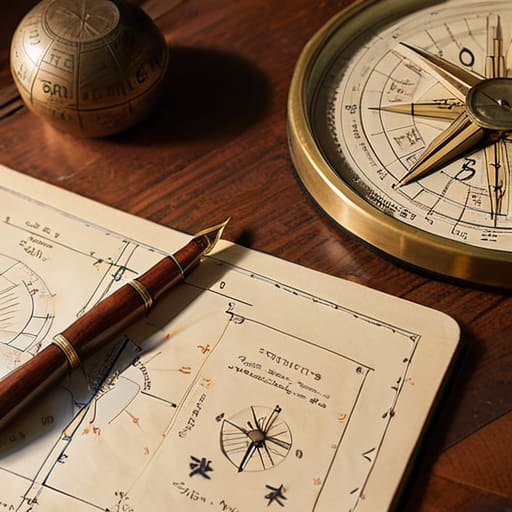
When you sit down with two charts, don’t try to solve the whole puzzle at once. I find it best to start with the static elements—the natal positions—before moving into the movement. If you are looking at astrological relationship cycles, begin by mapping out the transits against the composite chart. This helps you see if a sudden friction is a fundamental mismatch or simply a temporary transit through a sensitive point. I always keep a small notebook nearby to jot down these specific dates; seeing the math laid out on paper prevents you from getting swept up in the emotional gravity of the moment.
As you move forward, pay close attention to the evolution of romantic compatibility by tracking how the planets move through the houses over several years. It isn’t enough to look at a single snapshot in time. Instead, look for the patterns in how the energy shifts. Are the challenges coming from external circumstances, or are they reflecting shifting relationship dynamics that have been building for months? By documenting these cycles, you move away from guesswork and toward a clearer understanding of the actual mechanics at play.
Common Mistakes to Avoid
The most frequent error I see in synastry work is the tendency to treat a single transit as a permanent verdict. People often see a difficult aspect—say, a Saturn return hitting a partner’s Moon—and panic, assuming the relationship is fundamentally broken. In reality, you are looking at a temporary pressure point, not a structural failure. It is vital to distinguish between a passing season of friction and the evolution of romantic compatibility over a decade. If you mistake a temporary weather pattern for the climate, you’ll make decisions based on fear rather than the actual architecture of the bond.
Another pitfall is ignoring the individual’s personal progressions in favor of the comparison itself. You can look at two charts side-by-side all day, but if you don’t account for how each person is growing independently, you miss the psychology of relationship changes. A connection that felt seamless in your twenties might feel restrictive in your forties simply because your individual charts have moved into different phases. Don’t let the math of the comparison blind you to the lived reality of two people moving through different life stages.
Final Thoughts
I’ve spent many evenings hunched over my card index, comparing the charts of people who have been together for forty years against those who barely made it past the second anniversary. What I’ve learned is that a comparison isn’t a static snapshot; it’s a living, breathing thing. When we look at astrological relationship cycles, we aren’t looking at a fixed destiny, but rather the mathematical rhythm of how two people encounter one another. Some cycles bring a sense of profound alignment, while others merely highlight the friction that was always present in the math.
Ultimately, my goal isn’t to give you a roadmap that tells you exactly when to stay or when to leave. Instead, I want to provide you with the tools to observe the evolution of romantic compatibility as it actually happens. Whether you are navigating shifting relationship dynamics or simply trying to understand why a certain season feels heavier than the last, remember that the chart is just a map of the weather. It shows you the potential for storms and the potential for sun, but you are the one who has to decide how to sail the ship.
The Limits of the Snapshot
A birth chart is a snapshot of a moment, but a comparison is a living thing. When we look at how two people drift in and out of alignment, we aren’t watching fate rewrite itself; we are watching the mathematical tension between two moving points. The math tells us where the friction is, but it can never tell you if you have the grace to handle the heat.
Rosalind Teague
The View from the Index Card
We have looked at how the math shifts, how the initial data points lose their sharpness, and why trying to force a static conclusion onto a moving target is a fool’s errand. Whether you are looking at a synastry chart between two people or tracking a person’s own transits over a decade, the core lesson remains: the variables are never truly fixed. I have spent years filing away charts, and if there is one thing my index cards have taught me, it is that the precision of a comparison is entirely dependent on the window of time you choose to observe. If you ignore the movement of the planets or the shifting context of a human life, you aren’t reading a chart; you are merely staring at a frozen snapshot that has already begun to fade.
Ultimately, my goal isn’t to give you a roadmap that promises to never change. Instead, I want to give you the tools to see the mechanics of the movement itself. The charts show us the potential energy and the mathematical cycles, but they do not dictate the final outcome. There is a certain quiet freedom in knowing that the data has limits. When you understand where the calculation ends and where your own agency begins, you stop looking for a script and start looking for a way to navigate. Use the math as a guide, but keep your eyes on the horizon, not just the ink on the page.