

I remember sitting at my mother’s heavy oak desk in the late eighties, surrounded by the scent of old paper and the rhythmic thwack of her letterpress. She used to tell me that a chart is just a map, but a map is useless if you don’t actually walk the terrain. Most people I meet treat their birth chart like a static piece of art—something to be printed out, framed, and admired for its aesthetic complexity. They wait for the stars to “speak” to them as if they’re waiting for a telegram from a distant relative. But if you aren’t keeping a notebook alongside your chart, you aren’t actually doing the work; you’re just staring at a complicated drawing of a clock and wondering why you’re late for work.
I’m not here to sell you a mystical journal filled with gold-leafed prompts or tell you that your handwriting can change your destiny. What I want to do is show you how to use a simple, blank ledger to track the actual friction between your planetary placements and your lived reality. I will explain how to record the specific moments when a transit actually feels like something, rather than just a vague headline in a magazine. We are going to look at the data, observe the patterns, and find the honest limits of what these symbols can actually tell you.
The Math Ends Here Keeping a Notebook Alongside Your Chart
The math ends here: keeping a notebook alongside your chart is where the calculation stops being a static map and starts being a living thing. An ephemeris can tell you exactly where Saturn is sitting on a Tuesday afternoon, but it cannot tell you how that transit actually felt when you were sitting in traffic or staring at a mounting pile of laundry. By recording planetary movements in relation to your own internal weather, you bridge the gap between a geometric calculation and your lived reality.
I don’t believe in magic, but I do believe in patterns. When you use monthly astrology diary methods, you aren’t looking for prophecies; you are looking for correlations. If you notice that every time Mars squares your natal Sun you find yourself picking fights with the neighbors, that isn’t a cosmic decree—it’s data. I suggest you treat your notebook like a researcher treats a lab log. Note the date, the transit, and the specific emotion or event. Eventually, you’ll stop looking at the stars for answers and start using them as a way to organize your own observations.
Beyond the Ephemeris Recording Planetary Movements With Precision

When I was working in the library, I learned that a single data point is rarely as useful as the sequence that follows it. The same applies here. You can look at an ephemeris and see that Saturn is moving through your fourth house, but that is just a mathematical fact. To make it useful, you need to practice recording planetary movements against the actual texture of your days. I don’t mean writing “Saturn is square my Moon” and calling it a day; I mean noting that on Tuesday, the sudden urge to reorganize your kitchen cabinets felt less like a chore and more like a heavy, structural necessity.
This is where the real work of connecting transits to daily life begins. I suggest setting up a simple grid in your notebook: one column for the planetary position and another for your subjective experience. Don’t worry about being profound. If a transit makes you feel particularly irritable or unusually focused, write it down. Over time, you stop looking for “predictions” and start recognizing the specific, rhythmic way certain celestial geometries interact with your personal temperament.
Data Over Destiny Effective Natal Chart Observation Techniques
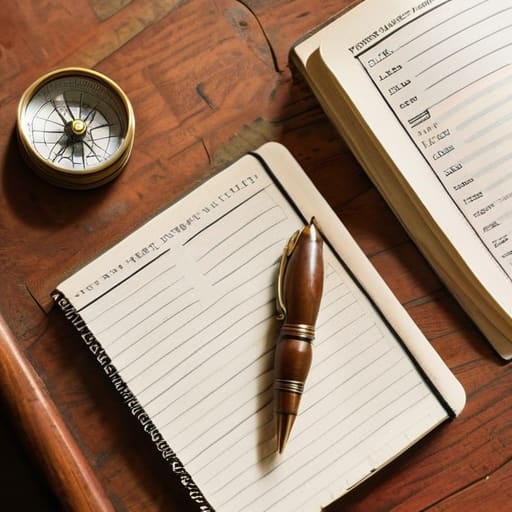
When you sit down with your chart, don’t just look for the “big” hits like a Saturn return. Instead, try a few specific natal chart observation techniques that favor data over drama. I suggest starting with a simple two-column system in your notebook. On the left, record the specific transit—for example, Mars crossing your Ascendant—and on the right, leave space for the raw, unvarnished reality of your day. Did you feel a sudden burst of irritability, or did you simply finish a difficult project? Writing down the actual event prevents you from retroactively forcing the astrology to fit your mood.
If you find yourself staring at a blank page, use a few astrological transit journaling prompts to get the gears turning. Rather than asking, “What does this mean for my soul?”, ask something more mechanical: “How does my energy level correlate with the current lunar phase?” or “Which house is being activated today, and where am I feeling that tension physically?” This shifts the practice away from vague mysticism and toward a disciplined study of your own patterns. You aren’t looking for a prophecy; you are looking for the rhythm of your own life.
Bridging the Gap Connecting Transits to Daily Life Realities
Once you have the math down, the real work begins in the mundane. A transit isn’t a lightning bolt from the heavens; it is more like a change in the weather. You might see Mars squaring your natal Moon on paper, but the chart won’t tell you if that manifests as a heated argument with your landlord or simply a sudden, inexplicable urge to scrub the kitchen floor. By connecting transits to daily life in your notes, you move away from vague predictions and toward actual patterns. I find it helpful to record the planetary movement in the margin, then write exactly what happened that day—even if it was just a particularly frustrating commute.
To make this useful, I suggest using specific astrological transit journaling prompts to keep your entries from becoming mere weather reports. Instead of writing “Saturn is squaring my Sun,” try asking, “Where did I feel a sense of restriction or heavy responsibility today?” This shifts the focus from the celestial object to your lived experience. It is the difference between reading a manual and actually driving the car. Over time, you will stop looking for “what will happen” and start seeing how you respond to the cycles as they pass.
Patterns in the Ink Monthly Astrology Diary Methods
Once you have the daily habit of note-taking down, I suggest moving toward more structured monthly astrology diary methods. Rather than just jotting down a fleeting mood, I like to sit down on the first of the month with my ephemeris and my current chart. I look at which houses the major planets are visiting over the next four weeks. I make a notation of these upcoming transits in the margin of my calendar, not as a prophecy of what will happen, but as a map of where my attention is likely to be pulled.
When I review these entries at the end of the month, I am looking for the friction points. I want to see if a period of high tension in my personal life actually aligns with a specific planetary movement, or if I simply had a bad week due to lack of sleep. This is the essence of connecting transits to daily life without falling into the trap of superstition. By looking at the month in its entirety, you stop seeing isolated incidents and start seeing the larger, rhythmic cycles that characterize your own experience.
Measuring the Unseen Spiritual Growth Through Astrology Observation
I have always been wary of the word “spiritual” when it is used to bypass hard evidence, but there is a difference between cosmic destiny and the internal shifts we experience over time. When you use astrological transit journaling prompts to track your moods or your reactions to external stressors, you aren’t looking for a prophecy; you are looking for a mirror. By documenting how a specific transit coincides with a period of introspection or a sudden change in perspective, you begin to see the architecture of your own psyche. It isn’t about the planets “making” you feel a certain way, but rather observing how certain mathematical cycles seem to pulse in rhythm with your personal development.
This is where the real work happens. If you are diligent about connecting transits to daily life in your notes, you will eventually notice that certain themes—perhaps a recurring need for solitude or a sudden urge to reorganize your career—tend to arrive when specific planetary alignments occur. I don’t call this magic. I call it pattern recognition. You are simply building a library of your own evolution, one entry at a time, until the map of your life becomes much clearer than any single reading could ever provide.
The Limits of the Page
A birth chart is a map of possibilities, not a script for your life; the notebook is where you prove which parts of that map actually lead somewhere.
Rosalind Teague
The Final Index Entry
We have covered a lot of ground, moving from the rigid precision of planetary transits to the messy, unscripted reality of your daily life. By keeping a notebook, you aren’t just collecting data; you are building a bridge between the mathematical movement of the planets and the actual lived experience of being human. You’ve learned how to record movements with precision, how to use structured prompts to bypass vague feelings, and how to spot the recurring patterns that an ephemeris alone can never reveal. The goal was never to turn you into a calculator, but to help you become a reliable witness to your own timeline.
At the end of the day, a chart is just a snapshot of a moment in time—a map of potential, not a set of instructions. My mother’s books used to promise that the stars would reveal your destiny, but my years in the library taught me that the most important data always comes from the person standing in the center of the circle. Use your notebook to find the truth of your own rhythms. When you look back at your entries a year from now, don’t look for what the planets “did” to you; look for how you responded to them. That is where the real work happens.
