


I remember sitting at my mother’s kitchen table in the late eighties, surrounded by those thick, colorful paperbacks that promised to reveal your “ultimate cosmic destiny” through the houses. They made it sound like a spiritual lottery, as if a planet landing in a certain sector meant you were predestined to be a millionaire or a martyr. It’s a frustrating way to look at things, and frankly, it’s why so many people walk away from astrology feeling confused or even lied to. I spent twenty years in a library learning how to separate data from drama, and I think it’s time we finally discuss the twelve houses in plain language, stripping away the mystical fluff to see what the math actually shows us.
I’m not here to tell you that the houses are a roadmap to your soul, or that they hold the keys to your future. What I will do is show you how the chart is divided into twelve distinct spheres of activity and how we calculate which area of your life is being highlighted by a specific planet. My goal is to give you a clear, mechanical understanding of the framework so you can look at your own chart and decide for yourself what the patterns actually mean.
Understanding the Twelve Houses in Plain Language

To understand how the houses function, you have to stop thinking of them as personality traits. If the planets are the actors and the zodiac signs are the costumes they wear, then the houses are simply the stages where the action takes place. When I’m looking at a client’s chart, I use the houses to determine where their energy is likely to manifest. For instance, a planet in Aries tells me how someone reacts, but a planet in the Tenth House tells me whether that reaction happens in their private living room or in the middle of a boardroom.
When you are understanding your birth chart houses, it helps to view them as twelve distinct slices of a circular pie, each representing a specific area of human experience. Some slices govern your internal world, like your private thoughts and subconscious habits, while others govern your external world, like your career or your social circles. I find that interpreting house placements becomes much less confusing once you stop trying to find “destiny” in them and start seeing them as a map of where your attention tends to go.
Key Things to Know

Before we dive into the specifics, there are two things I need you to keep in mind so you don’t get lost in the weeds. First, a house is not a planet. If the planets are the actors in a play, the houses are simply the stage directions telling you where the action is happening. You might have a very loud, expressive Mars, but if it’s sitting in your twelfth house, that energy is likely playing out in private or behind the scenes rather than on a public stage. Understanding your birth chart houses requires this distinction; the planet provides the “what,” but the house provides the “where.”
Second, please don’t get hung up on the math of different astrology house system explained in various textbooks. Whether you use Placidus or Whole Sign, the fundamental concept remains: we are dividing the sky into twelve slices to categorize different life experiences. I’ve spent years cross-referencing these systems against the ephemeris, and while the math changes the boundaries, the zodiac houses and life areas they represent stay remarkably consistent. I’m not here to teach you complex trigonometry, but I am here to help you see the map.
Practical Tips and Steps
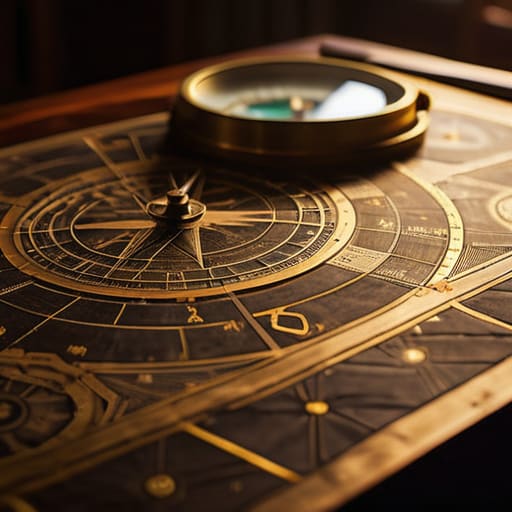
If you are sitting there with a printed chart and a feeling of being overwhelmed, my first piece of advice is to stop trying to read everything at once. When I’m interpreting house placements, I never start with the planets. I start by looking at the house cusps—the actual lines that divide the circle. Think of it like a map: the planets are the travelers, but the houses are the terrain they are walking through. Before you worry about what a Saturn placement “means” for your career, look at the house it sits in to see which specific area of life is being highlighted.
I suggest a slow, manual approach to understanding your birth chart houses. Take a physical copy of your chart and a highlighter. Instead of looking for “good” or “bad” luck, simply label the slices. If you see a cluster of planets in the fourth house, don’t panic about “domestic turmoil”; just acknowledge that your energy is being pulled toward your private, foundational roots. By treating the houses as containers for energy rather than scripts for your fate, you move away from superstition and toward a more practical, structural view of your own temperament.
Common Mistakes to Avoid
The most frequent error I see—and I’ve seen it in thousands of my own index cards—is the tendency to treat a house placement as a fixed sentence. People often look at a planet in the tenth house and conclude, “I will definitely be a CEO.” That isn’t how the mechanics work. A house is simply a container, a specific zodiac house and life area where a planet’s energy is likely to play out. It’s the stage, not the script. If you start interpreting house placements as rigid prophecies, you’re moving away from calculation and into guesswork.
Another trap is getting bogged down in the math of the astrology house system explained without understanding the context. Some beginners try to force a “perfect” reading by ignoring the house cusps or the way a planet might be “ruled” by a sign in a different house. I always tell my clients: don’t let the jargon obscure the reality. If you find yourself getting lost in complex terminology, step back. Focus on the basic relationship between the planet and the area of life it sits in, rather than trying to build a cathedral of meaning out of a single data point.
Final Thoughts
I’ve spent a lot of time looking at these twelve slices of the sky, and if there is one thing my years in the library taught me, it’s that a map is only as good as the person reading it. When you are understanding your birth chart houses, please remember that they are merely a framework—a way to organize the data of the moment you arrived. They don’t dictate your character, and they certainly don’t trap you in a predestined path. They simply show you where your energy tends to gravitate.
As you move forward with interpreting house placements, I suggest you keep your notebook handy and stay curious. Don’t feel pressured to have it all figured out by the time you finish your first reading. Astrology is a slow study, much like learning the nuances of a complex typeface on my letterpress. Take the information, cross-reference it with your own lived experience, and see what holds weight. My job ends once I’ve shown you how the mechanism works; the rest of the story belongs entirely to you.
The Map and the Territory
I view the houses not as a set of pre-written fates, but as a simple coordinate system; they don’t tell you what will happen to you, they merely show you the different rooms in which your life’s various energies are likely to show up.
Rosalind Teague
A Final Note from My Index Cards
We have spent a good deal of time looking at the mechanics of the twelve houses—how they divide the sky into specific sectors and how they act as the stage upon which your planetary placements perform. Remember that the houses are not fixed stars; they are a mathematical division of space based on your specific moment of birth. If you get the time wrong, the houses shift, and the entire map changes. I always write the birth time down twice in my ledger just to be certain of that foundation. Don’t let anyone tell you these slices of the sky are predetermined fates. Instead, view them as a structural framework that helps you organize where certain energies in your life are most likely to manifest.
At the end of the day, a chart is just a snapshot of a moment in time, a piece of data captured in ink. It can tell you where the wind might blow, but it cannot tell you how you will choose to set your sails. My goal has never been to give you a script to follow, but rather to give you a better set of tools for your own self-examination. Use these house descriptions to ask better questions of yourself, rather than looking for easy answers. The most important part of any reading isn’t what is written in the ephemeris, but how you choose to live within the patterns you discover.
