


I spent twenty years in a reference library, and if there is one thing I learned, it is that people love a tidy, predictable narrative. In the world of astrology, you’ll often hear pundits claim that certain people are “fated” to enter your life to trigger a massive, cinematic transformation. It’s a comforting thought, but it’s largely nonsense. When we look at synastry—the way two charts interact—we aren’t looking for destiny; we are looking for patterns of friction and flow. I am interested in the mechanics of how certain people become the contacts that carry weight over years, not because a star decreed it, but because their planetary placements create a specific, repeatable resonance with your own.
I won’t promise you that a specific transit will bring a soulmate to your doorstep, nor will I use jargon to mask the fact that human relationships are messy. Instead, I am going to show you how to identify the specific mathematical markers in a chart that indicate long-term stability versus fleeting intensity. We will look at the heavy hitters—Saturnian aspects and steady house placements—to understand why some connections fade while others anchor us. I’ll show you what the geometry says, and then I will leave the interpretation to you.
The Mechanics of Connection Identifying the Contacts That Carry Weight Over

To understand why some people drift away after a single season while others become permanent fixtures, we have to look at the geometry of the houses. I don’t look for “soulmates”—that’s a term that does more harm than good—but I do look at the seventh and eleventh houses. The seventh is where we encounter the “Other” in a one-on-one capacity, while the eleventh governs our broader social circles and collective aims. When a person’s natal planets form stable aspects, such as a trine or a conjunction, to your own, it creates a rhythmic resonance. It isn’t magic; it is simply a matter of how your psychological blueprints tend to interact.
In my experience, the difference between a fleeting acquaintance and sustaining deep human connections often comes down to how these planetary placements are activated by transits. A heavy Saturn involvement might feel restrictive at first, but it is often the very mechanism responsible for nurturing lifelong friendships because Saturn demands time and structure. It forces a certain level of accountability that lighter, more volatile planets often bypass. I look for these slow-moving, structural signatures to see where the potential for longevity actually lies.
Calculating Social Capital the Hard Math of Building Social Capital
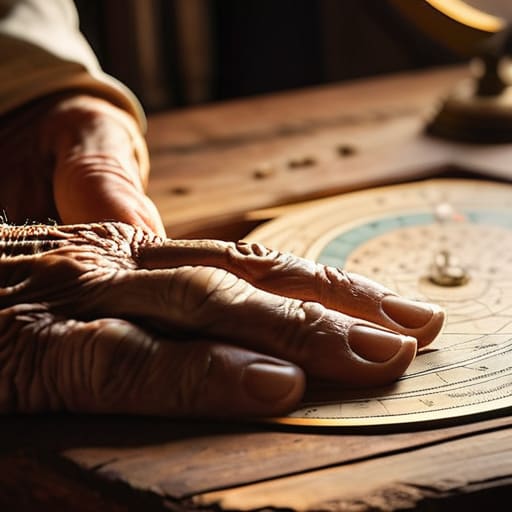
When I look at a chart to understand how someone navigates their social world, I don’t look for “destiny.” I look at the mathematical tension between the 7th house of partnership and the 11th house of community. To understand the process of building social capital, you have to look at the aspect patterns—the specific angles—formed between these houses. A square between your Jupiter and your Saturn, for instance, doesn’t guarantee a lonely life; it simply indicates a structural friction that requires you to work harder to turn a casual acquaintance into a reliable ally.
It is a matter of quality over quantity in networking. In my experience with the ephemeris, I’ve noticed that those with strong placements in fixed signs often struggle with the fluidity required for new connections, yet they excel at sustaining deep human connections once the foundation is laid. The math shows us the capacity for endurance, not the specific names of the people you will meet. We are looking at the container, not the liquid inside.
Astrological Indicators of Lasting Bonds Mapping the Fixed Points

When I look at a chart to find the potential for long-term stability, I don’t look for “magic” connections. Instead, I look for the presence of fixed signs—Taurus, Leo, Scorpio, and Aquarius—particularly in the houses governing social interaction. While mutable signs are wonderful for meeting new people, they tend to drift. If you are interested in sustaining deep human connections, you are looking for planets sitting in these fixed degrees. They provide a certain structural density to a person’s social life, acting like the heavy, letterpress type I use in my studio; they don’t shift easily once they’ve been set into the frame.
I also pay close attention to the relationship between Saturn and the personal planets. Saturn is often unfairly maligned as the “planet of restriction,” but in the context of building social capital, it is actually the planet of durability. A Saturn aspect doesn’t promise a crowded room; it promises a room that stays full long after the party has ended. It’s about quality over quantity in networking, favoring the slow-growing oak over the seasonal wildflower. I’ll show you where these heavy hitters sit in your chart, but whether you choose to invest that time into those specific people is entirely up to you.
The Precision of Quality Over Quantity in Networking
When I was working the reference desk, I saw this play out in the stacks every day: the person who tried to borrow every book in the library ended up with nothing, while the researcher who focused on three specific, reliable sources actually finished their thesis. Networking operates on the same principle of diminishing returns. In a chart, we often see a flurry of activity in the third house—lots of chatter, lots of acquaintances—but that doesn’t equate to stability. True quality over quantity in networking isn’t a moral judgment; it’s a mathematical reality of how much psychic and temporal energy a single person can actually distribute.
If you are looking at a transit or a natal placement, don’t mistake a busy social life for a foundational one. I look for the difference between the fleeting spark of a Mercury conjunction and the slow, heavy pull of a Saturn aspect. The former gives you a contact; the latter gives you a pillar. Sustaining deep human connections requires a specific kind of astrological architecture—usually involving the more grounded, slower-moving planets—that simply cannot be achieved through sheer volume of interaction.
The Emotional Intelligence Required for Sustaining Deep Human Connections
A chart can show you the capacity for connection, but it cannot do the heavy lifting of maintenance. I often see charts with heavy Neptune or Venus placements that suggest a person is a magnet for others, yet those same individuals struggle with the actual work of sustaining deep human connections. The math tells us where the potential for affinity lies, but it doesn’t account for the grit required when the initial novelty of a relationship fades.
In my experience, the most resilient bonds aren’t just about finding the “right” person; they are about the emotional intelligence in relationships required to navigate the inevitable friction of two lives intertwining. You might have strong astrological indicators of lasting bonds, such as a well-aspected Saturn, which suggests a capacity for endurance. However, Saturn is a cold teacher. It provides the structure, but it is your own ability to communicate through discomfort that determines whether that structure becomes a sturdy home or a rigid cage. We must distinguish between the celestial blueprint and the daily, unglamorous effort of showing up.
Nurturing Lifelong Friendships Data Points in a Shifting World
When I look at a chart to understand how someone maintains their circle, I don’t look for a list of names. I look for the placement of the Moon and the stability of the Saturn aspects. If you want to understand the process of nurturing lifelong friendships, you have to look at how an individual handles the slow, often tedious work of consistency. In my experience, a person with a strong Saturn aspect to their 11th house isn’t necessarily “lucky” with friends; rather, they possess the structural integrity required to keep a connection from dissolving when life gets inconvenient.
It is easy to mistake a busy social calendar for meaningful connection, but the math rarely supports that. True quality over quantity in networking shows up in the way certain transits interact with your natal placements—it’s about the durability of the bond, not the frequency of the interaction. I’ve spent years cross-referencing these patterns in my index, and the data is clear: sustaining deep human connections requires a specific kind of emotional patience that most modern “networking” advice completely ignores. It isn’t about the initial spark; it is about the slow accumulation of shared history.
Where the Patterns End the Limits of Relational Prediction
I have spent many afternoons cross-referencing birth charts against my old card index, looking for the “magic” people claim exists in certain alignments. I have found that while we can identify the astrological indicators of lasting bonds—such as a strong Saturn aspect or a well-placed Jupiter—these are merely blueprints, not destinies. A chart can show a high capacity for sustaining deep human connections, but it cannot account for the Tuesday afternoon when one person simply decides to stop answering the phone. The math provides the architecture, but it does not provide the willpower.
The limitation lies in the gap between potential and action. You might see a configuration that suggests a massive opportunity for building social capital through a specific peer group, yet if you lack the agency to walk through the door, the stars remain silent. We can map out the geometry of a relationship, but we cannot map the unpredictable volatility of human choice. Astrology shows us the weather; it does not force us to step outside into the rain.
The Weight of the Long View
I don’t look for “destined” soulmates in a chart; I look for the mathematical persistence of certain planetary aspects. A connection that carries weight over decades isn’t a magical accident—it is often just the slow, steady resonance of two charts whose fixed points happen to overlap when the world gets loud.
Rosalind Teague
The Ledger of a Life
We have looked at the mechanics of the chart, from the fixed points that suggest stability to the complex math of how social capital accumulates over decades. I have tried to show you that a “weighty” connection isn’t a mystical decree from the heavens, but rather a specific alignment of timing, temperament, and effort. Whether it is a Saturnian influence demanding structure or a nodal connection suggesting a shared path, these are merely mathematical probabilities mapped onto the human experience. We have seen that while the chart can point toward certain people who may act as anchors, it cannot account for the daily, quiet work of showing up. The data tells us where the potential lies, but it does not guarantee the outcome.
As I sit here at my desk, looking over my index cards and the ink-stained proofs of my latest print run, I am reminded that a chart is a map, not the journey itself. You can study the topography of your social landscape until you know every ridge and valley, but you still have to walk the ground. Use these indicators not as a way to pre-judge your acquaintances, but as a way to recognize the value of the people who actually stay. In the end, the most enduring connections aren’t just found in the ephemeris; they are built, one intentional choice at a time.
