


I remember sitting at my kitchen table years ago, surrounded by my mother’s old, dog-eared paperbacks and a stack of library call slips, trying to reconcile a client’s vague memory of a “late afternoon” birth with the actual mathematical reality of the shifting houses. There is a particular kind of social friction that occurs when you find yourself asking someone for their birth details; it can feel intrusive, like you’re demanding a piece of their private history just to satisfy a curiosity. Most people approach this with a sort of mystical entitlement, as if the universe owes them a revelation, but I’ve learned that the most profound insights actually come from the precision of the data, not the drama of the request.
In this post, I want to move past the awkwardness and the superstition. I am going to show you how to approach this conversation with tact, why the specific mechanics of a birth time matter more than the “vibe” of a reading, and how to handle the inevitable gaps in memory without resorting to guesswork. I won’t promise you that these numbers hold the secrets to your destiny, but I will promise to show you exactly what the math can and cannot tell us once you have the right information in hand.
The Raw Mechanics Why Birth Details Are Not Mere Superstition

Think of a birth chart not as a mystical decree, but as a snapshot of a moving target. At any given moment, the planets are positioned at specific longitudinal degrees, and those positions change constantly. To get an accurate reading, we aren’t looking for “vibes”; we are looking for coordinates. This is why the importance of birth time in astrology cannot be overstated. Without a precise minute, I cannot calculate your Ascendant or the specific house placements that give the chart its structure. If you are off by even twenty minutes, the entire mathematical framework of your life’s map shifts, potentially placing a planet in an entirely different sector of your personality.
The same logic applies to where you entered the world. Because the Earth rotates, your exact longitude determines which part of the sky was rising over your horizon at that exact second. This is why birth location matters in astrology—it provides the terrestrial anchor for the celestial math. Without the city and state, I’m essentially trying to navigate a sea without a compass. I’m not looking for these details to satisfy a sense of ritual, but to ensure the mathematical integrity of the data before I even begin to interpret it.
Beyond the Calendar the Vital Importance of Birth Time in Astrology

If the date tells us the general weather, the birth time tells us exactly where the storm is hitting. Without it, we are essentially trying to read a map that lacks a scale. In technical terms, the exact minute of your arrival determines your Ascendant—the degree of the zodiac rising on the eastern horizon. This isn’t just a personality quirk; it is the mathematical foundation for the entire house system. If I don’t have that time, I cannot tell you which areas of your life the planets are actually illuminating.
This is where many people run into trouble when asking for birth date for compatibility or seeking a personal reading. They assume a few minutes won’t matter, but a shift of even twenty minutes can move a planet into an entirely different house, changing the entire context of its influence. It is the difference between saying “you might be prone to change” and “change is specifically concentrated in your career sector.” Because the earth rotates so steadily, the sky is constantly shifting; precision is the only way to respect the importance of birth time in astrology.
Mapping the Coordinates Why Birth Location Matters in Astrology
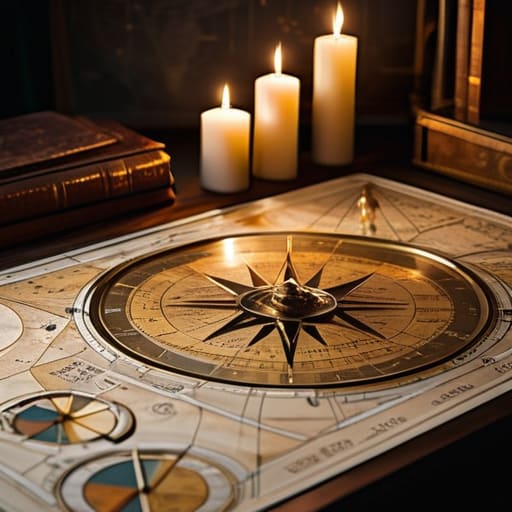
If the date gives us the planetary alignment and the time gives us the house structure, the location is what anchors the entire geometry to a specific point on the Earth’s surface. We aren’t just looking at a snapshot of the sky in a vacuum; we are looking at how that sky appeared to a person standing in a specific latitude and longitude. This is why birth location matters in astrology more than most people realize. Without the precise coordinates of the town or city where you first drew breath, I cannot accurately calculate the Ascendant or the house cusps. Even a shift of a few dozen miles can change the mathematical framework of your entire chart.
Think of it like a map. If you tell me you are looking for a specific house but don’t tell me which city you’re in, the directions are useless. When I am asking for birth date for compatibility or looking at a single person’s transit, I need that geographic anchor to ensure the math holds up. I don’t want to give you a vague approximation based on a general region; I want the precise intersection of time and space. It is the difference between a blurry photograph and a sharp, high-resolution image.
The Etiquette of Inquiry How to Ask for Birth Time Politely
Asking for someone’s birth details can feel like an accidental intrusion into their most private history. It is a strange request to make over coffee or through a casual text—asking for the exact minute a person entered the world. If you are navigating the waters of a new relationship and find yourself asking for birth date for compatibility purposes, you must approach it with a certain degree of grace. I have found that the best way to avoid appearing voyeuristic is to lead with the why before the what. Instead of demanding data, explain that you are looking at the mechanics of how two people might interact.
When you do ask, do so with an out that preserves their dignity. Not everyone has a birth certificate handy, and some may have been born in a hospital where the time was never recorded, or perhaps they simply find the whole thing a bit too personal. I always suggest offering your own details first; it turns a clinical interrogation into a shared exchange of information. By framing it as a way to understand the mathematical landscape of your connection, you move the conversation away from superstition and toward a genuine, respectful curiosity.
Navigating Social Etiquette for Requesting Birth Info Without Intrusion
Asking for someone’s birth details can feel a bit like asking for their medical history or their bank balance; it’s deeply personal data. When you are asking for birth date for compatibility purposes, or simply trying to understand a friend better, the approach matters. I’ve found that the best way to handle the social etiquette for requesting birth info is to lead with the why rather than the what. Instead of firing off a list of requirements like a census taker, try explaining that you are looking at the mechanics of their chart. People are much more willing to share if they understand that you aren’t trying to peer into their secrets, but rather trying to understand the mathematical framework of their personality.
If you are worried about being intrusive, offer a bit of your own information first. It levels the playing field. You might say, “I’ve been studying how certain planetary alignments work, and I was wondering if you’d be open to sharing your birth details so I could see how it looks in your chart?” This frames the request as a shared intellectual curiosity rather than an interrogation. Remember, if they seem hesitant, respect the boundary. Not everyone wants their life mapped out, and that is perfectly okay.
The Compatibility Equation Asking for Birth Date for Compatibility Checks
When people talk about “synastry”—the technical term for overlaying two charts to see how they interact—they often treat it like a cosmic matchmaking service. I prefer to think of it as a study of friction and flow. If you are asking for birth date for compatibility purposes, you aren’t looking for a verdict on whether a relationship will last; you are looking to see where two different temperaments might bump into one another. A person with a heavy Saturn influence might feel the need to provide structure, while a partner with a dominant Jupiter might find that same structure stifling.
To do this accurately, you cannot rely on a simple sun sign comparison. That is the astrology of newspaper columns, and it lacks the necessary precision. For a real look at how two people’s internal architectures mesh, you need the full set of astrological natal chart requirements: the date, the exact time, and the location. Without the time, you miss the house placements, which are the very areas of life where these interactions actually play out. You aren’t just looking at who they are, but where in their lives those planetary energies will land.
Asking Someone for Their Birth Details Gathering the Natal Chart Requiremen
When I sit down at my desk, I always start by clearing a space for my index cards. Before I even look at an ephemeris, I make sure I have the full set of astrological natal chart requirements laid out in front of me. It isn’t enough to just have a date; you need the trifecta of day, precise minute, and the specific town of birth. If I’m missing even one of these, the math simply won’t hold up, and I’ll end up guessing at a house division or a degree that might be entirely wrong.
If you are looking to do this for someone else, treat it like gathering historical data rather than prying into their secrets. I find that being transparent about the why helps ease any tension. If you are asking for birth date for compatibility purposes, tell them that. Explain that you aren’t looking for a way to judge their character, but rather trying to see how two different sets of mathematical coordinates might interact. It turns a potentially awkward interrogation into a shared moment of curiosity.
The Weight of the Request
When you ask someone for their birth time, you aren’t just asking for a data point to plug into a calculator; you are asking for the coordinates of their arrival. It is a request for the specific moment the math began, and it deserves to be handled with more care than a simple inquiry into a phone number.
Rosalind Teague
The Final Calculation
We have covered a lot of ground, from the mathematical necessity of precise coordinates to the delicate social dance of asking a new acquaintance for their most private data. Remember that you aren’t just asking for numbers; you are asking for the geospatial and temporal anchors that allow a chart to exist. Without the exact minute of birth or the specific city of arrival, we are merely guessing at shadows. By approaching the request with technical clarity and social grace, you respect both the integrity of the math and the boundaries of the person standing in front of you.
Ultimately, whether you are checking a compatibility chart or simply curious about a friend’s planetary placements, treat the information with the same care I give my letterpress ink. A chart is not a roadmap of destiny, nor is it a set of instructions for how to live. It is a snapshot of a specific moment in time—a complex, mathematical representation of a beginning. Once you have the data and have done the work to map it, the rest is up to you. The stars provide the coordinates, but you provide the meaning.
