

I remember sitting at my mother’s kitchen table in the late eighties, surrounded by her dog-eared paperbacks and the smell of stale tea, watching her try to tell a neighbor exactly what would happen to her marriage based on a single transit. She wasn’t trying to be deceptive; she was just caught up in the drama of it all. But after twenty years in a reference library, I learned that there is a massive, fundamental difference between looking at how two celestial bodies interact and claiming to know the final outcome of a human life. People often come to me asking if a synastry reading can guarantee a wedding date, but I have to be blunt: a comparison is not a prediction. One is a map of potential friction and flow; the other is a fantasy of certainty that the math simply doesn’t support.
In this post, I’m going to strip away the jargon and show you how I actually use comparison techniques to look at how two charts “talk” to one another. I won’t be offering you any magical guarantees or telling you that the planets have already decided your future. Instead, I will explain the mechanics of how we layer one chart over another and where the data ends and your own free will begins. My goal is to give you the honest limits of the technique so you can use the information to make your own informed decisions.
The Math of Connection Why a Comparison Is Not a Prediction

When I sit down with two birth charts, I start by laying them out side-by-side, looking for where one person’s planets touch the other’s houses. This is what we call synastry chart interpretation, and it is a purely structural exercise. I am looking at how your Mars interacts with my Moon, or how your Saturn sits on my Ascendant. It is a map of potential friction and resonance—a way of seeing how two distinct solar systems might orbit one another. But I want to be clear: seeing a connection on paper is not the same as seeing a future.
The mistake people often make is conflating transits vs synastry. A synastry chart shows the mechanics of your personalities—the blueprint of how you might clash or click. Transits, on the other hand, involve the current movement of the planets through those established points. One tells you what the engine is capable of; the other tells you when you might hit a pothole. I am showing you the architecture of the relationship, but I cannot tell you if you will choose to live in the house or tear it down.
Decoding the Blueprint Natal Chart Overlays Explained
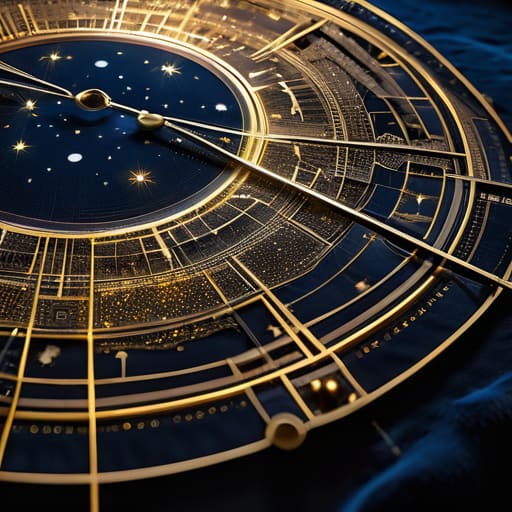
When I sit down with two separate birth charts, I don’t look for a “soulmate score.” Instead, I look at how one person’s planets interact with the other’s house structures. This is the core of natal chart overlays explained: it is the process of taking Person A’s planets and laying them over the map of Person B’s life. If your Mars falls into my fourth house, it doesn’t mean we are destined to fight; it simply means your energy activates my sense of privacy and home. It is a mechanical overlay of one person’s energetic signature onto the landscape of another.
This is where people often trip up, confusing relationship dynamics in astrology with a fixed outcome. An overlay tells us where friction or ease might occur, but it doesn’t dictate how you will handle it. I think of it like a weather report for a specific terrain. The overlay tells me that a storm system (a planet) is moving over a valley (a house), but it doesn’t tell me if you’ll decide to stay inside or grab an umbrella. We are looking at understanding astrological potential, not reading a script for your life.
The Limits of Synastry Chart Interpretation

The biggest mistake I see in most modern astrology columns is the assumption that a heavy aspect between two people is a mandate for a lifelong union. When I am performing a synastry chart interpretation, I am looking at the friction and the flow between two distinct blueprints, but I am not looking at a script for your life. A chart can show you that your Mars sits right on someone else’s Saturn—which suggests a certain kind of heavy, restrictive tension—but it cannot tell you if you will choose to work through that tension or simply walk away. The math shows the potential for friction, not the inevitability of a breakup.
It is also vital to distinguish between the static nature of a comparison and the moving parts of the sky. People often conflate transits vs synastry, expecting the relationship map to predict exactly when a fight will happen. While synastry tells us about the underlying relationship dynamics in astrology, it is the transits that bring the weather. You might have a beautiful, harmonious overlay, but a sudden Saturn transit can make that harmony feel incredibly heavy for a few months. I provide the data on the architecture, but I cannot account for the people living inside the house.
Calculating Friction Navigating Relationship Dynamics in Astrology
When I look at two people’s charts, I’m not looking for a “happily ever after” stamp of approval. I’m looking for the friction points. In my experience, most people approach relationship dynamics in astrology expecting a weather report, but what they are actually seeing is a map of potential tension. For instance, if one person’s Mars is squaring another’s Saturn, the math tells us there is a structural clash between impulse and restraint. It doesn’t mean you’ll fight every Tuesday; it simply means that when you do clash, the mechanism of that disagreement will likely involve one person feeling blocked by the other.
It is vital to distinguish between these inherent personality frictions and the external pressure of time. This is where people often confuse transits vs synastry. A synastry chart shows the static blueprint of how your energies interact, while transits show when the current planetary movements are “poking” that blueprint. You might have a highly compatible synastry chart, yet find yourselves in a period of intense strain because a heavy Saturn transit is hitting a sensitive point. I view this as understanding astrological potential rather than accepting a fixed fate; the friction is just the data telling you where the work needs to be done.
The Crucial Divide Transits vs Synastry
This is where most people get tripped up, and it’s where I often see the most confusion in my correspondence. When we talk about transits vs synastry, we are looking at two entirely different mathematical operations. Synastry is a static snapshot; it is the study of how two people’s permanent blueprints—their natal charts—interact with one another. It tells you about the inherent relationship dynamics in astrology, like whether your Mars naturally agitates their Moon. It is a map of potential friction or flow that exists as long as both people are standing in the same room.
Transits, however, are the moving parts. They are the current positions of the planets in the sky as they pass over those fixed natal points. This is where we move into the realm of astrological timing vs compatibility. You might have a synastry chart that suggests a deep, soulful connection, but if Saturn is currently transiting your descendant, that connection might feel heavy, restrictive, or temporarily stalled. One tells you who the players are; the other tells you when the weather changes. Understanding this distinction is the only way to avoid treating a temporary seasonal shift like a permanent character flaw.
Timing the Spark Astrological Timing vs Compatibility
Think of it this way: synastry tells us if two people speak the same language, but timing tells us if they are actually in the room at the same time to have the conversation. You can have a beautiful synastry chart where your Venus sits perfectly on someone else’s Mars, creating a lovely, high-voltage connection. But if one of you is in a decade-long period of Saturnian restructuring and the other is focused entirely on career expansion, that “spark” might feel more like a nuisance than a romance. This is the core of astrological timing vs compatibility; the blueprint shows the potential, but the clock dictates the experience.
I often see people get caught up in the mechanics of natal chart overlays explained in books, assuming that because the math is compatible, the relationship is a certainty. It isn’t. A person can be your perfect astrological match on paper, yet if their current transits are pulling them toward solitude or radical change, the relationship won’t “work” in a practical sense. We have to distinguish between the permanent architecture of your personalities and the temporary weather passing through your lives. One is the house; the other is the storm.
Mapping the Horizon Understanding Astrological Potential
When I look at a pair of charts, I am not looking for a guarantee of a wedding or a breakup; I am looking for the topography of the encounter. Think of it like studying a map of two different terrains. One person might be a rugged mountain range, while the other is a sprawling, low-lying marshland. When you lay them side-by-side, you aren’t seeing a forecast of a storm; you are seeing how those two landscapes might interact when they meet. This is the essence of understanding astrological potential. It is about recognizing the raw materials you have to work with before the actual living begins.
In my years of keeping index cards on these connections, I’ve found that people often confuse the capacity for friction with the inevitability of it. If we are looking at natal chart overlays explained through the lens of two people, we are simply identifying where one person’s planets might “touch” the sensitive points of another. It tells us where the energy is likely to be concentrated, but it doesn’t dictate how you will choose to use that energy. The math shows us the possibility of impact, but the actual impact is something you two build, day by day, through your own agency.
The Difference Between Data and Destiny
When I lay two charts side-by-side, I am looking at how two different sets of weather patterns might interact—whether one person’s storm clouds drift into another person’s sunny afternoon. That is a mathematical observation of potential friction or flow, but it isn’t a script. A synastry chart shows you the terrain of the relationship, but it cannot tell you if you will choose to walk the path together or turn back at the first sign of rain.
Rosalind Teague
The Map is Not the Journey
We have spent a good deal of time separating the mechanics of the chart from the theater of fortune-telling. We’ve looked at how synastry overlays show us where two lives might intersect, how transits provide the timing, and why a mathematical alignment in a chart is a description of potential energy, not a script for your future. I want to reiterate that seeing a heavy aspect between two people doesn’t mean a breakup is inevitable, nor does a harmonious trine guarantee a lifelong romance. My goal throughout this piece has been to show you that astrology is a language of patterns and tendencies, not a series of fixed commands from the heavens.
At the end of the day, I treat these charts much like the letterpress blocks I use in my studio: they are tools for making an impression, but they are not the ink itself. The ink is your own agency, your choices, and the lived reality of your relationships. Use these calculations to understand the underlying architecture of your connections, but never let a spreadsheet of planetary degrees tell you who you are allowed to love or how you must behave. The data is there to provide context, but you are the one holding the pen.
