

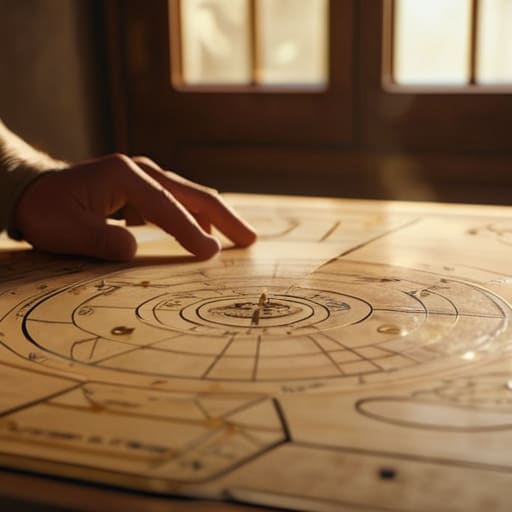
I was sitting in the back corner of the university library last Tuesday, surrounded by the smell of aging paper and floor wax, when I saw a young woman staring at a printed natal chart as if it were a map to a buried treasure. She looked exhausted, searching the planetary aspects for a sign that her life would finally make sense. It’s a look I’ve seen for decades, usually right before someone realizes that the math on the page is being used to perform a magic trick. There is a certain kind of predatory astrology out there that promises to solve your grief or predict your next promotion, but it ignores the fundamental truth of what a chart cannot tell you.
I am not interested in selling you a destiny or a divine script. My goal here is much more mechanical and, I hope, much more useful: I want to show you the architecture of the calculations and where the data actually runs out. I will walk you through the mechanics of the ephemeris and the limits of the houses, providing a clear-eyed view of the tool itself. By the time we are done, you won’t have a list of prophecies, but you will have a much better understanding of the honest boundaries of this practice.
The Geometry of Silence What a Chart Cannot Tell You
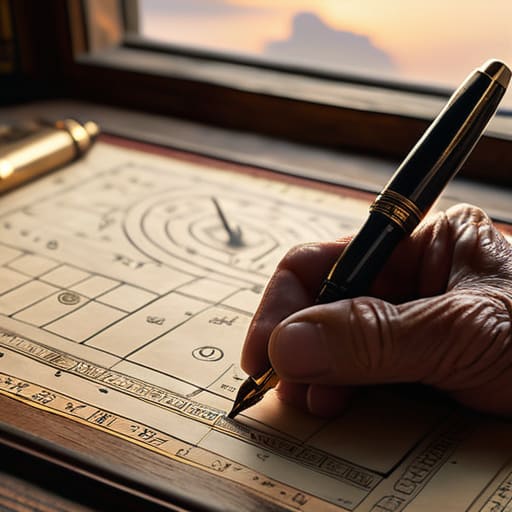
When I sit down with a new chart, I first record the birth time in my ledger, then I write it again on my scratchpad. It’s a habit born of a librarian’s need for precision, but it also serves as a reminder of how much we rely on exact data to build a map. However, even with a perfect ephemeris, there is a fundamental gap between the mathematical placement of a planet and the lived experience of a person. A chart can tell you that Mars is squaring Saturn, indicating a tension between drive and restraint, but it cannot tell you how you will resolve that tension. It cannot account for the way a specific upbringing or a sudden, unexpected choice alters the trajectory of a life.
This is where we encounter the friction of free will vs determinism in astrology. Many people approach a reading looking for a script, but a natal chart is more like a weather report than a fixed itinerary. It shows the atmospheric conditions present at your first breath, yet it remains silent on the specific paths you choose to walk through the storm. The limitations of natal chart readings lie in this very silence; the geometry of the aspects provides the framework, but it lacks the vital, unpredictable pulse of human agency.
Calculated Coordinates vs the Chaos of Human Complexity
When I sit down with a fresh ephemeris, I am essentially looking at a snapshot of planetary positions at a specific millisecond. It is a precise, mathematical coordinate system. But there is a massive, gaping chasm between the astrology accuracy and human complexity that we must acknowledge. A chart can tell me that Mars was conjunct Saturn at your moment of breathing, suggesting a certain tension between drive and restraint. It can tell me the mathematical degree of your Ascendant. What it cannot do, however, is account for the specific, messy way you chose to handle your first heartbreak or the way your grandmother’s temperament shaped your sense of security.
This is where we encounter the real limitations of natal chart readings. We often get caught up in the debate of free will vs determinism in astrology, treating the planets like puppeteers. I prefer to see them more like the weather. A weather report can tell you it will be raining in London on Tuesday, but it cannot tell you if you will choose to stand in the rain or hide under an umbrella. The math provides the climate, but you provide the response.
Beyond the Birth Chart the Unmapped Terrain of Being
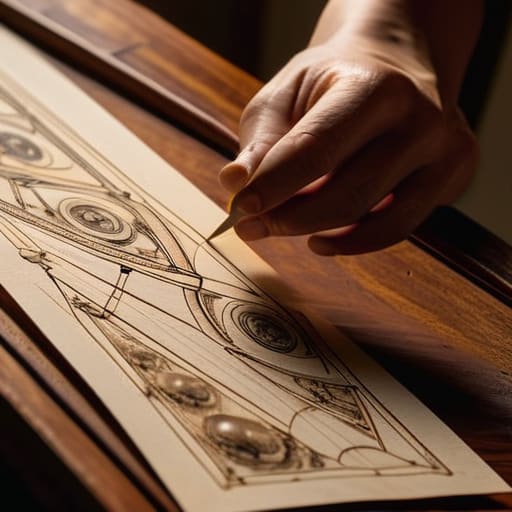
When I sit down with my card index and a fresh sheet of heavy-weight paper, I am always mindful of the space between the ink and the intent. A natal chart is a snapshot of a moment, a mathematical record of where the planets sat when you took your first breath. But even the most precise calculation of a Saturn return cannot account for the sheer, stubborn weight of a person’s character. We often get caught up in the debate of free will vs determinism in astrology, treating the chart like a blueprint for a finished house, when it is more like a weather report. It tells you the atmospheric pressure and the likely direction of the wind, but it says nothing about how you choose to set your sails.
There is a profound difference between the planetary positions and the lived experience of a human being. You can map every square and trine in a person’s life, yet you will never find the specific, unquantifiable texture of their resilience or the way they choose to love. These are the limitations of natal chart readings that I find most important to respect: the math can provide the coordinates, but it cannot provide the destination.
The Calculus of Choice Free Will vs Determinism in Astrology
When I sit down with my index cards and a fresh printout of a transit chart, I’m looking at a mathematical snapshot of a specific moment in time. It is a map of tendencies, not a script for a play. People often get caught up in the debate of free will vs determinism in astrology, treating the planets like puppeteers pulling at their limbs. But that isn’t how the mechanics work. A Saturn transit might indicate a period of structural tension or a need for discipline, but it cannot force you to quit your job or marry a stranger. It merely describes the atmospheric pressure of your life at that moment.
The tension lies in the gap between the calculation and the consequence. You can have a chart that suggests a lifetime of communication prowess, yet you might choose a life of silence. This is where the limitations of natal chart readings become most apparent. The chart provides the weather report, but you are the one deciding whether to build a shelter or walk out into the rain. I see the math as a set of inclinations—a leaning toward certain behaviors—but the actual direction of your life is steered by the constant, messy application of your own agency.
Transits and Personal Agency Navigating the Mathematical Winds
When I sit down with a client, I often find myself looking at the transits—the current positions of the planets as they move through the sky—and overlaying them against that static, frozen map of their birth. It is tempting to view these movements as a weather report for your life, a series of incoming storms or sudden sunbeams. But that is where the math ends and the human begins. A transit can indicate a period of tension, such as a Saturn return, but it cannot dictate your response to that tension. The calculation tells us when the wind is blowing, but it says nothing about how you choose to set your sails.
This is the core of the debate regarding free will vs determinism in astrology. If a transit hits a sensitive point in your chart, the mathematical reality is there—the aspect is real—but the expression of that energy is entirely yours. I see many people paralyzed by the idea that a “bad” transit is an unavoidable catastrophe. In reality, these cycles are more like rhythmic shifts in the environment. You are not a leaf being tossed by the gale; you are a person navigating a changing climate. Understanding transits and personal agency means recognizing that the chart provides the timing, but you provide the intent.
The Fog of Interpretation Navigating Astrological Nuances
Even after twenty years of cross-referencing ephemerides against my mother’s old paperbacks, I still find myself staring at the same problem: the gap between a mathematical aspect and a lived experience. When I see a square between Mars and Saturn, I see a specific geometric tension, a calculated friction. But that calculation doesn’t tell me if that tension manifests as a disciplined career or a sudden, temperamental outburst in a grocery store aisle. This is where we encounter the astrological interpretation nuances that many writers gloss over with sweeping generalities. We are translating symbols into language, and language is a notoriously leaky vessel.
The real difficulty lies in the fact that a symbol is a starting point, not a destination. You can map out every transit and every house placement with mathematical precision, but you cannot map the quality of a person’s character. The data provides the weather report, but it doesn’t tell you how the person chooses to dress for the rain. Recognizing these limitations of natal chart readings isn’t an admission of failure; it is an act of intellectual honesty. It allows us to respect the math without pretending it has the power to dictate the soul.
Honest Limits Where the Math Ends and You Begin
When I sit down at my desk, I always write the birth time down twice—once on my notepad and once on my index card—to ensure the foundation is solid. But even with a perfect timestamp and a flawless ephemeris, there is a point where the math simply runs out of breath. A natal chart is a snapshot of celestial geometry at a specific moment, a set of mathematical ratios between planets. It can tell you that Saturn is squaring your Moon, which might manifest as a period of emotional restriction or structural discipline, but it cannot tell you how you will choose to meet that tension. This is one of the fundamental limitations of natal chart readings: they provide the weather report, not the itinerary.
The math is precise, but it is inherently silent on the matter of character development. You might have the planetary configuration of a scholar or a healer, but the chart doesn’t account for the books you actually read or the way you choose to treat a stranger. We often get lost in the debate of free will vs determinism in astrology, searching for a way to bridge the gap between a calculated degree and a lived experience. I’ve found that the most honest way to view it is this: the chart provides the coordinates, but you are the one doing the driving.
The Boundary of the Ink
A birth chart is a map of the weather, not a script for the play; it can tell you when the winds are likely to shift and where the pressure is building, but it can never tell you how you will choose to set your sails.
Rosalind Teague
The Map is Not the Territory
We have spent this time looking at the mechanics—the way the ephemeris provides the coordinates, but fails to provide the context of a human life. I have tried to show you that while the math of a transit or a natal aspect is precise, it is ultimately a description of weather, not a decree of destiny. A chart can tell you when a heavy wind is blowing through your fourth house, but it cannot tell you if you will choose to batten down the hatches or set sail. It identifies the patterns, the archetypes, and the mathematical tensions, but it remains stubbornly silent on the actual substance of your character and the specific, messy decisions you make in the heat of the moment.
As I sit here at my desk, looking over my index cards and the ink-stained proofs of my latest print run, I am reminded that the most beautiful things in life are often those that cannot be calculated. Astrology is a tool for orientation, a way to understand the seasonal shifts of your internal landscape, but it is not a replacement for your own sovereign agency. Do not let a reading make you feel small or predestined. Instead, use the data as a way to see the terrain more clearly, and then walk your own path with your eyes wide open. The stars may provide the map, but you are the one holding the compass.
