

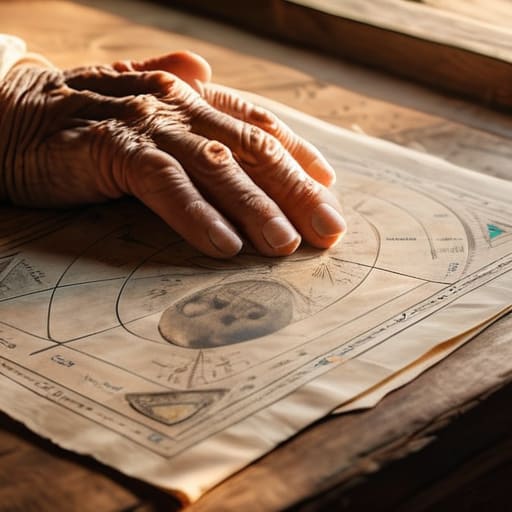
I was cleaning out my desk last Tuesday when I found a stack of index cards from 1994, each containing a birth time written twice in my neatest script and a set of messy, hand-plotted transits. Looking at those old notes, I realized how much the industry has moved toward selling “destiny” as if it were a fixed commodity you could buy in a glossy magazine. People often come to me frustrated because they feel they’ve outgrown their old readings, but the truth is much more mechanical than that. It isn’t that the stars have changed their personalities; it’s that thirty years in and the chart reads differently because the mathematical cycles of the outer planets have finally caught up to the lived reality of the person holding the paper.
I’m not here to promise you a cosmic epiphany or tell you that your life is being scripted by the heavens. Instead, I want to show you the actual math behind how these long-term cycles shift our perspective as we age. I will walk you through the movement of Saturn and Pluto across your houses, explain why certain patterns repeat, and point out exactly where the calculations end and your own agency begins. My goal is to give you a clear, unsentimental map of the mechanics so you can decide for yourself what the data actually means for your life.
The Math of Maturity Why Thirty Years in the Chart Reads Differently

To understand why a chart feels different at forty than it did at twenty, you have to look past the symbols and toward the mechanics. When I was a librarian, I spent a lot of time looking at how data sets change when the variables shift; astrology works much the same way. We aren’t looking at a static snapshot anymore, but rather the interaction between your birth positions and the current sky. This is where secondary progressions in astrology come into play. These aren’t external planets hitting your chart; they are a mathematical method of “evolving” your natal positions day-by-day, year-by-year. It’s as if your soul is slowly turning a dial, moving a planet from one sign to another, changing the internal “flavor” of your personality without changing the original coordinates.
This isn’t some mystical transformation; it is a predictable mathematical progression. As these progressed points move, they trigger different parts of your original map, which is why many people experience what is colloquially called an astrological midlife crisis. It isn’t that the stars have suddenly changed their minds about who you are; it is simply that the math has finally reached a point where your internal tension is being highlighted. I find that reinterpreting birth charts in adulthood requires acknowledging that the “you” of twenty is often just the foundation for the “you” of forty.
Secondary Progressions in Astrology Tracking the Slow Shift of Self

If transits are like the weather passing over a landscape, then secondary progressions in astrology are more like the slow, tectonic shift of the landscape itself. I like to think of them as the internal clock of the psyche. While a transit might trigger an event, a progression describes a change in how you experience being you. We calculate these by moving each planet forward one day for every year of life lived. It’s a mathematical way of simulating the way a person matures; the Moon, moving much faster than the others, becomes a primary indicator of our changing emotional needs.
This is often where people find the mechanics behind what they colloquially call an astrological midlife crisis. It isn’t necessarily a period of chaos, but rather a period of reinterpreting birth charts in adulthood. You might find that a planet that felt volatile in your twenties suddenly feels quiet, or a dormant part of your personality begins to demand attention. I don’t view this as the stars changing their minds about you; I view it as the math reflecting the gradual, inevitable evolution of the self as you move through the decades.
Calculating the Shift Reinterpreting Birth Charts in Adulthood
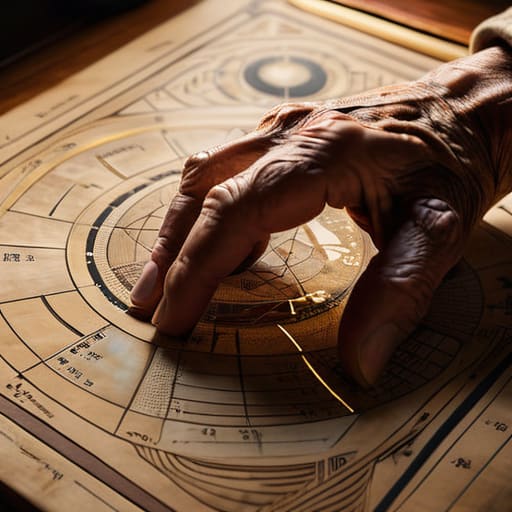
When I sit down at my desk to look at a chart for someone in their late forties or fifties, I don’t just look at the positions of the planets on the day they were born. That would be like reading the first chapter of a novel and claiming you understand the ending. To truly understand reinterpreting birth charts in adulthood, you have to look at how the heavy hitters—Saturn and Pluto—are interacting with those original coordinates. It isn’t about the stars changing their positions; it’s about the mathematical relationship between where the planets were and where they are now.
I often see people panicking during what the magazines call an astrological midlife crisis, but when I look at the math, it rarely looks like a crisis. It looks like a structural tension. We are seeing the slow, grinding movement of outer planets squaring the natal sun or moon, forcing a person to reconcile their youthful impulses with their lived reality. I don’t believe these transits “cause” a breakdown; I believe they highlight the friction between who you intended to be and who you actually became. It’s less about fate and more about the inevitable weight of experience.
Navigating the Astrological Midlife Crisis Without the Mystical Fluff
When people talk about an astrological midlife crisis, they usually frame it as some cosmic upheaval, as if the planets are suddenly staging a coup against your personality. I don’t see it that way. When I look at the math, what I’m actually seeing is the friction between who you were told to be at twenty and who you actually are at fifty. This isn’t a spiritual breakdown; it’s more of a recalibration of the data. You aren’t becoming a different person; you are simply encountering the parts of your natal chart that you were too busy or too young to notice the first time around.
This period is often defined by specific transits during midlife years—most notably the Saturn return’s long-term echoes and the heavy lifting of the outer planets. Instead of looking for a mystical sign to tell you to quit your job, I suggest looking at the natal chart evolution over time. If you see a heavy transit hitting your midheaven or your lunar nodes, don’t panic. It isn’t a decree from the heavens; it is a mathematical signal that your internal architecture is being asked to support more weight. It is about structural integrity, not destiny.
Heavy Transits During Midlife Years Data Over Destiny
When people talk about an astrological midlife crisis, they usually frame it as a cosmic intervention—as if the planets suddenly decided to throw a wrench in your gears. I’ve never found that to be the case. What I see in my index cards is much more mechanical. When we look at transits during midlife years, we are essentially watching the slow-moving outer planets—Saturn, Uranus, Neptune, and Pluto—make their way back to the exact positions they held when you were born. It isn’t a haunting; it’s a mathematical return.
If you are facing a heavy transit right now, it’s likely because a slow-moving planet is squaring or opposing a personal planet from your birth. This creates a tension that feels urgent, but it’s really just a structural stress test. The chart isn’t changing its fundamental blueprint, but the way those energies interact with your current reality is undergoing a period of natal chart evolution over time. It is less about “destiny” and more about the friction that occurs when your youthful programming meets the hard, unyielding reality of your lived experience.
The Astrology of Relationship Evolution and Changing Dynamics
When I look at the charts of people I’ve known for decades, the most striking thing isn’t how much they’ve changed, but how their relational needs have shifted in response to the math. In our twenties, we often focus on the synastry—the immediate, combustible friction between two people. But as we move into middle age, the conversation shifts toward the natal chart evolution over time. We stop asking if a person is “compatible” in a vacuum and start looking at how their evolving sense of self interacts with the long-term stability of a partnership.
This is where the astrology of relationship evolution becomes practical rather than poetic. It isn’t about finding a soulmate who matches a static blueprint; it is about observing how your secondary progressions in astrology might be pulling your internal priorities away from the person you were at twenty-five. A person might have a Venus in Leo that craved constant external validation in their youth, only to find that thirty years later, a Saturn transit has fundamentally rewired their need for quiet, private devotion. I don’t see this as a crisis of identity, but rather as a necessary recalibration of what a partnership must actually provide.
Natal Chart Evolution Over Time Where the Calculation Ends
I often find myself reaching for my card index when people ask if their “essence” has fundamentally changed since their twenties. I tell them the same thing I tell my students: the math of your birth chart is a fixed snapshot. The positions of the planets at the moment of your first breath don’t move; they are a set of coordinates, as static as a printed map. When we discuss natal chart evolution over time, we aren’t talking about the planets physically moving in your original chart, but rather how the moving bodies in the sky interact with those fixed points.
The calculation ends where the lived experience begins. You can track every transit and every one of the secondary progressions in astrology with mathematical precision, but a calculation cannot account for the specific, messy reality of your choices. A Saturn return might trigger a sense of structural collapse, but the chart won’t tell you if you’ll rebuild with brick or with sand. I can show you where the tension lies, but I cannot predict the outcome of your character. That is the honest limit of this work.
The Limit of the Map
I don’t believe the planets are rearranging themselves to spite you, nor am I going to tell you they are guiding you toward a destiny. What I am saying is that a birth chart is a snapshot of a moment, but life is a long, messy process of integration. After thirty years, you aren’t just reading the map anymore; you are finally seeing how the terrain actually feels under your feet.
Rosalind Teague
The View from the Index Card
Looking back through my files, I see the same pattern repeating: people come to me at thirty or forty feeling as though the ground has shifted beneath them. We have spent this time looking at the mechanics—how secondary progressions move the inner planets, how heavy transits interact with your natal placements, and how the math of your life changes as you age. It isn’t magic, and it isn’t a cosmic trap; it is simply the realization that a birth chart is a map of potential, not a static photograph. The data shows us where the tension lies and where the cycles are turning, but it cannot account for the sheer grit of the person living through it.
I often think about my letterpress work—the way you have to carefully align the type and check the ink before you can even think about the final impression. Astrology is much the same. The chart provides the heavy metal type, but you are the one doing the printing. Whether the transits feel like a gentle shift or a heavy strike, remember that the chart does not hold the pen. It only provides the framework. Use the math to understand your timing, use the cycles to understand your seasons, and then go out and live the life that the calculations can never quite capture.
